

Search is becoming more than a list of links, and that shift is changing what businesses need from their website strategy. Google and AI platforms are increasingly giving users direct answers, product information, recommendations, and links without requiring them to visit several websites first. For businesses, that creates a new visibility challenge: How do you make sure your brand and content are part of the information customers see when they search? The answer isn’t to abandon traditional SEO or create content solely for AI tools. It’s to build a stronger website strategy. One that demonstrates expertise, provides useful information, and makes your business easy for both search engines and customers to understand.
 AI Overviews and PAA: A New Layer of Search Visibility
Traditional search results gave businesses a relatively predictable path to visibility. You optimized a page, earned rankings, and competed for clicks. AI-powered search adds another layer.
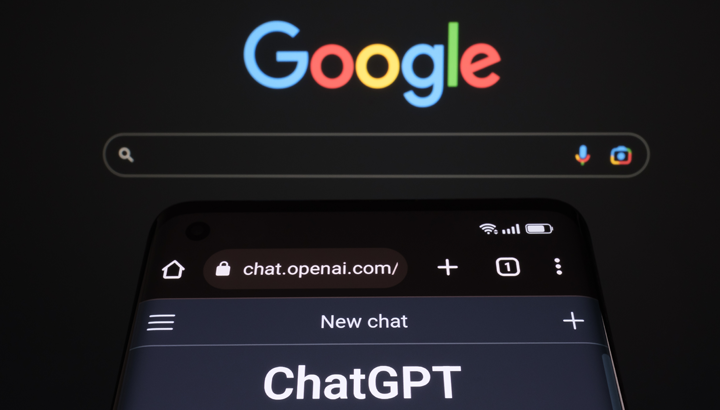
Google’s AI Overviews can provide generated summaries directly within search results, while features such as People Also Ask (PAA) give users answers to related questions without requiring them to navigate through multiple pages. AI platforms such as ChatGPT are also incorporating links and commercial information into certain search experiences.
For businesses, that means the search results page itself is becoming more influential in the customer journey. A potential customer may encounter your brand in an AI-generated answer, see your product referenced in a search result, read information pulled from your website, and only then decide whether to visit your site.
Your website still matters. But so does the information that surrounds it. That’s why businesses need to think about visibility beyond the traditional organic blue links.
Why Some Brands Struggle to Appear in AI Search
AI-powered search doesn’t eliminate the fundamentals of SEO. In many ways, it makes them more important. Search engines and AI systems need reliable information they can understand and use. If your website has thin product descriptions, poorly organized content, inconsistent business information, or little evidence of expertise, you aren’t giving these systems much to work with. And while keywords and backlinks still have an important role in SEO, they’re only part of the picture.
AI search places even greater emphasis on understanding context and connecting information from multiple sources. Your website needs to clearly communicate what your business does, who you serve, what makes your products or services useful, and why customers should trust you.
That means your product pages, service pages, blog content, FAQs, reviews, business listings, and third-party mentions all contribute to your broader digital presence.
Think of each one as another piece of evidence supporting your brand. When those pieces work together, search engines have a clearer picture of your business, and customers have more reasons to trust it.
E-E-A-T Still Matters
Google’s concept of E-E-A-T—Experience, Expertise, Authoritativeness, and Trustworthiness—has become an important consideration for businesses creating content for search. And the underlying idea is simple.
Show people that you know what you’re talking about.
That starts with demonstrating real experience. Content should reflect knowledge that comes from actually working in your industry rather than simply rephrasing information that already exists online. It also means establishing who is behind your content. Author bios, credentials, professional experience, original insights, and first-hand perspectives can help demonstrate expertise.
Authority comes from more than what you say about yourself, too. Customer reviews, reputable backlinks, industry mentions, testimonials, and other third-party signals can reinforce your credibility. And trust is built through the details. Accurate business information, clear contact information, transparent policies, secure websites, and consistent branding all contribute to a stronger customer experience.
E-E-A-T isn’t a formula you can add to a webpage with a plugin. It’s the result of building a credible business and making that credibility visible online.
Five Ways to Strengthen Your AI Search Visibility
We approach AI search as an extension of a broader SEO and content strategy. The goal isn’t to chase every new search feature. It’s to make your digital presence more useful, understandable, and authoritative wherever customers encounter it.
1. Strengthen Your Product and Business Information
If you’re an ecommerce business, your product data needs to be accurate, complete, and consistent. Product names, descriptions, features, specifications, pricing information, availability, images, and other important details should be clearly presented and kept up to date. For service businesses, the same principle applies to your service pages.
Don’t assume customers—or search engines—will fill in the gaps for you. Clearly explain what you offer, who it’s for, how it works, and what makes it different. The more complete your information is, the easier it becomes for both people and search systems to understand your business.
2. Create Content That Answers Real Questions
One of the best ways to strengthen your visibility is to answer the questions your customers are already asking.
– What do they want to know before purchasing?
– What problems are they trying to solve?
– What products or services are they comparing?
– What concerns could prevent them from moving forward?
These questions can become the foundation for blog posts, FAQs, buying guides, comparison content, and supporting service or product pages. The goal isn’t to create content simply because you have another keyword to target. The goal is to create something genuinely useful.
A well-written FAQ can help a customer make a decision. An in-depth guide can demonstrate expertise. A detailed comparison can help someone understand which option is right for their situation.
Every piece of content should have a job.
3. Use Structured Data to Help Search Engines Understand Your Content
Search engines have to interpret the information on your website before they can determine how to display it. Structured data can help provide additional context about certain types of content, including products, articles, organizations, businesses, events, and other entities.
Schema markup isn’t a magic switch that guarantees an AI Overview or featured result. But when implemented correctly, it can make your content easier for search engines to interpret. That’s why structured data should be part of a larger technical SEO strategy—not treated as a shortcut to visibility.
4. Build Content Around Search Intent
The questions people ask in search are often more specific than businesses realize. Someone searching for “running shoes” is at a very different stage of the buying process than someone searching for “best running shoes for flat feet under $150.” The same principle applies to virtually every industry.
Understanding search intent allows you to create content that addresses the actual reason behind a query rather than simply matching a keyword. This is particularly important as AI tools make conversational and highly specific searches easier. Your content needs to provide useful answers to those detailed questions.
That might mean creating dedicated FAQs, expanding product descriptions, developing educational resources, or building supporting content around your core services.
5. Measure, Learn, and Adapt
AI-powered search is evolving quickly. That means your strategy shouldn’t be something you implement once and forget.
Monitor your organic visibility. Watch changes in branded searches and referral traffic. Look at which pages attract engagement and which topics generate interest. Pay attention to how your brand appears when you ask AI tools relevant questions.
You won’t always be able to attribute a conversion directly to an AI-generated result, and you shouldn’t expect perfect attribution. What you can do is establish a baseline, monitor changes, and use what you learn to make better decisions. That’s how you build a sustainable strategy instead of chasing every new AI search announcement.
Don’t Treat AI Search and SEO as Separate Strategies
One of the biggest mistakes businesses can make is assuming that AI search requires an entirely new approach to digital marketing.
It doesn’t.
The same principles that make content valuable in traditional search often make it useful in AI-powered search, too.
– Clear information.
– Strong topical coverage.
– Demonstrated expertise.
– Logical site structure.
– Useful internal links.
– Authoritative third-party references.
– A trustworthy brand presence.
These aren’t new concepts. What’s changing is where customers encounter that information.
Someone might find your service page through Google today. Tomorrow, they might ask an AI tool to recommend businesses in your industry and encounter information sourced from that same page. Your goal should be to build a digital presence that works in both environments.
The Risk of Waiting
AI-powered search is still evolving, and no business can predict exactly what search will look like five years from now. But you don’t need to. You can focus on the fundamentals that aren’t going away.
Businesses that consistently provide useful information, demonstrate expertise, maintain accurate data, and build credibility across the web will be better positioned to adapt as search continues to change.
The biggest risk isn’t failing to optimize for one new AI feature. It’s continuing to treat your website as a collection of isolated pages instead of building a connected digital presence around your customers and your business expertise. Visibility isn’t just about appearing somewhere. It’s about being useful enough to be included—and credible enough to be trusted.
Frequently Asked Questions About AI-Powered Search
Q: What are AI Overviews?
A: AI Overviews are AI-generated summaries that can appear within Google’s search results for certain queries. They are designed to give users a direct overview of a topic while providing links to supporting sources.
Q: How can I get my products or services included in AI search results?
A: There is no guaranteed formula for appearing in an AI-generated result. The best starting point is to create clear, comprehensive, authoritative content that answers customer questions and accurately represents your products or services. Strong technical SEO, structured data, and a credible presence across the web can support those efforts.
Q: Is AI SEO different from traditional SEO?
A: AI search introduces new considerations, but it doesn’t replace traditional SEO. Search visibility still depends on many of the same fundamentals, including relevant content, technical accessibility, authority, and a strong user experience. AI-powered search adds another environment where those signals can influence how information is discovered and presented.
Q: Is AI-generated content enough to rank?
A: AI can be a useful tool for brainstorming, research organization, and drafting. But simply generating content with AI doesn’t make it valuable. Strong content still needs human expertise, original insights, editorial oversight, and a clear purpose. AI can help you work faster. It doesn’t replace the strategy behind what you’re creating.
Q: Can Triangle Direct Media help with AI search visibility?
A: Yes. Triangle Direct Media helps businesses strengthen the content, SEO, technical foundation, and digital authority that support visibility across traditional and AI-powered search. Our approach isn’t about trying to game an algorithm. It’s about building a stronger digital presence that works for your customers and your business.
Build a Stronger Foundation for the Future of Search
AI isn’t a temporary trend in search. But that doesn’t mean businesses need to throw out everything they know about SEO and start over. The better approach is to build on what already works.
Create useful content. Answer specific questions. Demonstrate real expertise. Make your website easy to understand. Strengthen your reputation beyond your own website. And connect all of those pieces into a strategy that supports your broader business goals.
The search landscape may continue to change.
Your strategy should be built to change with it.
If you’re not sure how your business currently appears in AI-powered search—or where the biggest opportunities exist—Triangle Direct Media can help. We’ll evaluate your current digital presence and identify practical ways to strengthen your visibility across both traditional and AI search.
Ready to build a stronger foundation for the future of search? Contact us today about our SEO services and AI visibility to start the conversation.